An oil stain can seem to disappear during pressure washing and become visible again once the driveway dries. This does not necessarily mean the stain returned overnight.
Concrete contains tiny openings that can hold oil below the surface. Pressure washing may remove the dirt and oily residue on top while leaving some of the absorbed oil behind. Wet concrete can also make the remaining stain harder to see. In some cases, an ongoing vehicle leak creates fresh staining in the same spot.
Knowing which of these problems you have matters because each requires a different response. Below, we explain how to identify the cause, what proper oil-stain treatment involves, and when our professional pressure washing services in and around Covington, LA can help.
What Are the Four Reasons an Oil Stain Appears Again?
A dark mark can show again for several reasons. Identifying the correct one prevents unnecessary washing and possible surface damage.
- Oil remains inside the concrete. Concrete contains tiny openings that can absorb oil below the visible surface.
- Wet concrete temporarily hides the mark. When the entire driveway is wet and dark, the stain may blend into the surrounding slab.
- A vehicle or machine continues to leak. Fresh fluid can recreate the spot after cleaning.
- The concrete itself has changed. Cleaning lines, chemical discoloration, surface wear, or exposed aggregate can resemble an oil stain.
We describe old oil becoming visible again as stain reappearance. If fresh oil reaches the cleaned area, that is stain recurrence. These problems may look similar, but they require different solutions.
Did the Stain Return, or Did Wet Concrete Temporarily Hide It?
Never judge an oil-stain treatment while the driveway remains wet. Water temporarily darkens concrete and reduces the contrast between the stain and the surrounding surface.
Wait until the treated area and nearby concrete dry evenly. Louisiana humidity, shade, airflow, and the condition of the slab can all affect drying time.
Once the surface dries:
- A mark with the same shape as the original stain usually points to embedded oil.
- A spot that grows or develops a fresh shine may indicate an active leak.
- Straight lines or overlapping cleaning marks may indicate uneven pressure.
- A faint shadow without an oily feel may be permanent discoloration.
For Covington driveway pressure washing, the dry-down check is an important part of understanding the real result.
How Can You Tell Whether the Mark Is Old Oil, Fresh Oil, or Surface Damage?
The mark’s shape, feel, and behavior offer useful clues.
| What You Notice | Possible Cause | What to Do Next |
| The original outline returns after drying | Oil remains in the concrete | Use targeted stain treatment |
| The spot grows or feels greasy | A vehicle or machine still leaks | Repair the source first |
| Lines follow the path of the washer | Pressure changed the surface | Inspect before washing again |
| The entire slab looks darker while wet | Water temporarily hides the contrast | Recheck after drying |
| A faint shadow remains without residue | Deep staining or discoloration | Set a realistic improvement goal |
It also helps to identify the fluid. Engine oil, transmission fluid, hydraulic fluid, and grease do not always respond to the same cleaning method.
Why Is More Pressure Not Enough for Oil Inside Concrete?
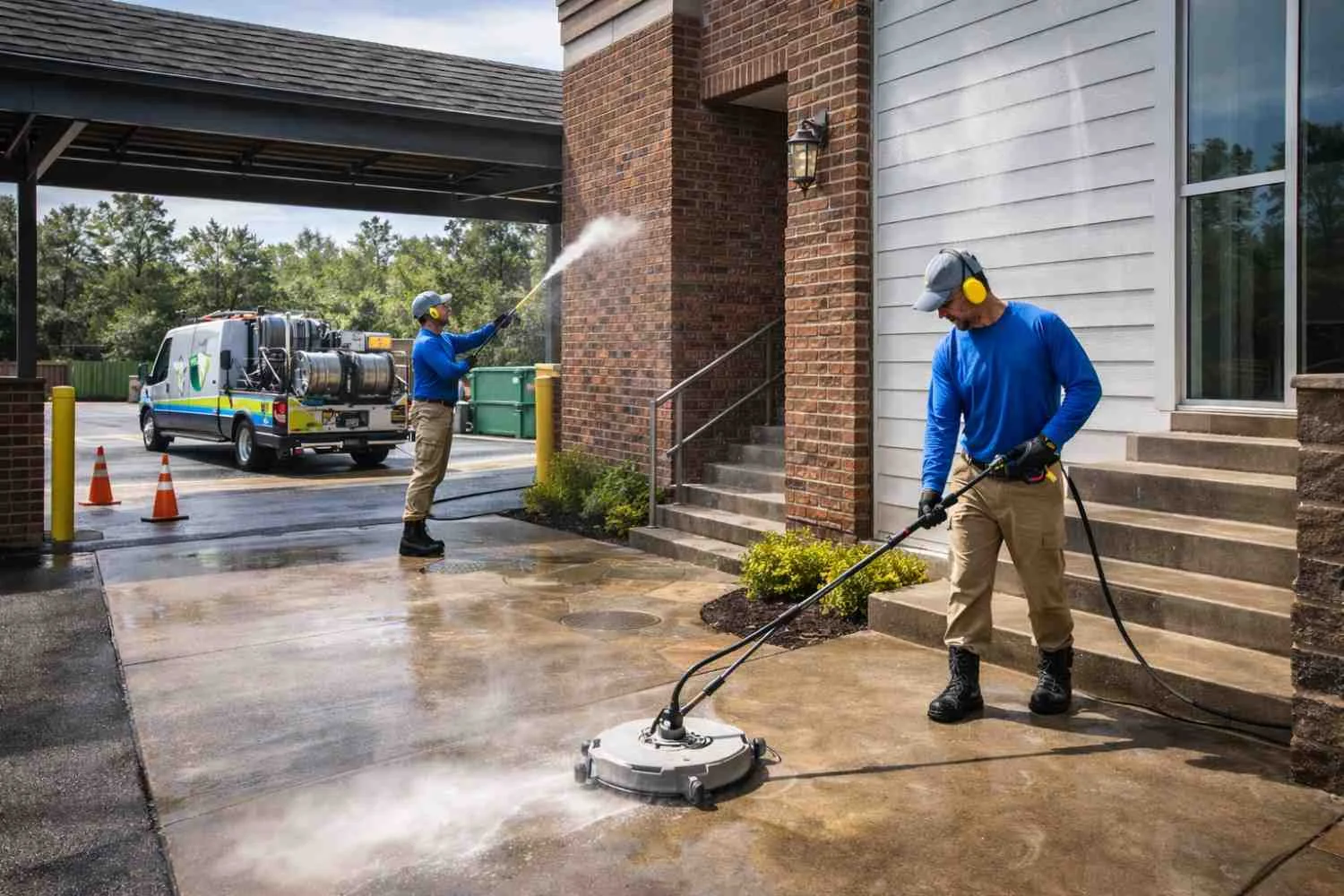
Concrete appears solid, but it contains small pores and cracks that can absorb liquid. A pressure washer can remove dirt and oil resting on the surface, but water pressure alone may not reach oil held deeper inside those openings.
There is an important difference between two cleaning goals:
- Surface washing removes dirt, organic buildup, and loose residue.
- Oil-stain treatment uses an oil-cutting cleaner, working time, careful brushing when suitable, and controlled rinsing.
Working time means allowing the cleaner to remain on the stain long enough to loosen the oily residue. Rinsing it away immediately may limit what it can remove.
Using more pressure can also create new problems. Excessive force may leave stripes, spread oily residue, weaken an already damaged area, or expose the small stones within the concrete. The driveway may look different while the original oil remains below the surface.
What Cleaning Process Helps Keep an Oil Stain From Showing Again?
A proper process treats the source, the stain, and the condition of the concrete.
- Stop the leak.
Repair the vehicle or equipment before cleaning. Otherwise, fresh fluid can quickly recreate the stain. - Absorb fresh oil.
Remove as much free oil as possible before adding water. Spraying a fresh spill immediately may spread it. - Inspect the concrete.
Check for cracks, coatings, weak areas, previous pressure marks, and the approximate age of the stain. - Choose the right treatment.
Match the cleaning solution and pressure level to the fluid and the condition of the surface. - Give the cleaner time to work.
Follow its directions and prevent it from drying on the concrete. - Rinse with control.
Keep oily water away from landscaping, gutters, and storm drains. - Inspect after drying.
The dry concrete reveals whether oil remains below the surface. - Retreat the stained area when needed.
An old or concentrated stain may need another localized application instead of another aggressive wash across the entire driveway.
For a small, deeply stained area, an absorbent treatment may sometimes pull out more oil than repeated full-driveway washing. This is one reason our pressure washing services in Covington, LA begin with the condition of the stain and surface—not the highest available pressure.
Can Every Old Oil Stain Be Removed Completely?
No responsible pressure washing company should promise complete removal without seeing the stain. The likely result depends on:
- How long the oil has remained
- How much fluid entered the concrete
- The type of oil or grease
- The porosity and condition of the slab
- Existing cracks or surface wear
- Previous coatings, chemicals, or cleaning damage
A fresh spill offers the strongest chance of substantial removal. A recent surface stain may respond well to targeted cleaning. An old stain that has soaked deeply into concrete may require more than one treatment and can leave a faint shadow.
A concrete sealer may make future spills easier to clean, but it cannot remove oil that already sits inside the slab. It also cannot prevent a vehicle from leaking again.
Why Does Oily Wash Water Need to Be Controlled?
Removing an oil stain does not mean pushing the contamination from the driveway into the gutter. Water carrying oil, grease, and cleaning products can move toward landscaping, neighboring property, or storm drains.
Runoff planning matters even more around:
- Commercial parking spaces
- Loading areas
- Dumpster pads
- Drive-through lanes
- Service entrances
- High-traffic walkways
Property managers scheduling commercial pressure washing in Madisonville, LA should ask how the crew will direct the water and protect nearby drains. Larger Madisonville commercial properties may also need cleaning divided into sections to keep entrances accessible.
How Does EV Cleaning Service LLC Approach Recurring Oil Stains?
We start by looking at the stain, the surrounding concrete, and the likely source. We then choose a method that fits the surface instead of treating every driveway with the same pressure setting.
When oil requires a cleaning solution, we use that treatment as part of the cleaning process rather than relying only on force. We also explain when an older stain may need additional treatment or may not disappear completely.
If you are comparing a pressure washing company in Covington, LA, ask these questions:
- Will the surface receive an assessment before cleaning?
- Will the company treat the oil or only wash the driveway?
- How will the crew control oily runoff?
- Will the result be checked after the concrete dries?
- Will the company explain realistic limits before starting?
A careful Covington exterior-cleaning team should answer these questions clearly.
Ready to Book Pressure Washing?
If an oil stain returned after your driveway dried, another high-pressure pass may not solve the problem. Let EV Cleaning Service LLC inspect the surface and recommend a cleaning approach suited to the stain and concrete.
Call +1 504-715-2114 or book your pressure washing service for a home or commercial property in Covington, Madisonville, Hammond, or a nearby Louisiana community.
FAQs
How quickly should I treat a fresh oil spill?
Address it as soon as possible. Stop the leak and absorb free oil before rain, tires, or rinse water spreads it across the driveway.
Should I repair the vehicle before booking pressure washing?
Yes. Cleaning before repairing the leak may produce only a temporary result. Fresh oil can recreate the stain in the same parking spot.
How long should the driveway dry before I check the result?
Wait until the treated spot and surrounding concrete look evenly dry. There is no single drying time because shade, humidity, airflow, and concrete condition all matter.
Is pressure washing suitable for cracked or sealed concrete?
It depends on the crack, coating, cleaner, and pressure level. The surface should receive an inspection before cleaning begins.
Can businesses schedule cleaning outside operating hours?
EV Cleaning Service LLC offers flexible commercial scheduling, including early-morning, after-hours, and weekend options. Businesses seeking commercial pressure washing in Hammond, LA can plan cleaning around customers, employees, and deliveries.
Will pressure washing remove the stain permanently?
It can remove or reduce the existing stain, but it cannot stop a new vehicle leak. Deeply absorbed oil may also leave some discoloration even after proper treatment.